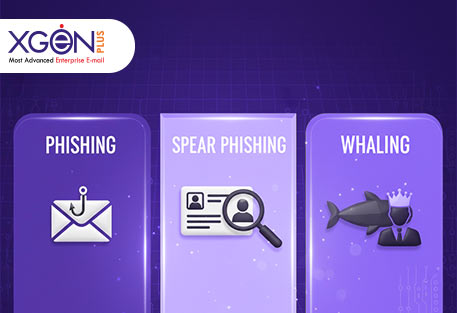
The three terms get used almost interchangeably, but they describe different levels of targeting — and the difference determines both how dangerous a given attack is and how to defend against it. All three are the same underlying trick (impersonating a trusted sender to get you to act), scaled to three very different levels of effort and precision.
Phishing — the Broad, Untargeted Version
Generic phishing is a mass campaign: the same fake “your account is locked” or “invoice attached” message sent to thousands of addresses, hoping a small percentage click. No personalization, no research on the target — pure volume. It’s the least sophisticated of the three, and the easiest for a trained eye (or a spam filter) to catch, precisely because it isn’t tailored to anyone.
Spear Phishing — Targeted at a Specific Person
Spear phishing is phishing with research behind it. The attacker knows the target’s name, role, employer, maybe a recent project or a real vendor relationship — pulled from LinkedIn, a company website, or a previous breach — and builds a message that references real, specific context. That specificity is what makes it dangerous: “this doesn’t sound like something a random scammer would know” is exactly the instinct spear phishing is built to defeat.
Whaling — Spear Phishing Aimed at Decision-Makers
Whaling is spear phishing narrowed further: the target is a senior executive, finance lead, or someone else who can authorize a large transfer or access sensitive strategic information with a single reply. The stakes are why whaling causes the heaviest financial damage of the three — a successful whaling attack can move real money in one step, where broad phishing usually only harvests credentials that still need to be exploited afterward.
Which One Is Actually Most Dangerous?
By volume, generic phishing wins by a wide margin — it’s still the most common attack by raw count. By impact per successful attack, whaling is the most damaging: it targets people with the authority to move money or approve sensitive access directly, so one successful whaling email can cause more damage than thousands of failed generic phishing attempts combined. Spear phishing sits between the two — more damaging per attempt than generic phishing, more common than whaling, and often the reconnaissance step that makes a later whaling attempt more convincing.
| Type | Targeting | Typical volume | Damage per success |
|---|---|---|---|
| Phishing | None — mass blast | Very high | Low-to-moderate (usually credentials) |
| Spear phishing | Specific individual, researched | Moderate | Moderate-to-high |
| Whaling | Senior decision-maker specifically | Low | Very high (direct financial loss) |
How to Tell Which One You’re Looking At
- Generic phishing: impersonal greeting, broad claim (“your account,” “your package”), sent to what feels like a mass list.
- Spear phishing: uses your actual name, role, or a real project/vendor — specific enough that it feels credible on its own.
- Whaling: targets someone who can approve money or access directly, often impersonating another executive, with urgency and authority both leaned on hard.
Defending Against All Three
The countermeasures scale with the targeting, but the core habits carry across all three: verify the sender’s actual domain (not the display name), treat urgency-plus-authority as the pattern to distrust regardless of how convincing the details are, and — this is the one that specifically stops whaling — confirm any unusual money-movement or access request through a separate, pre-agreed channel before acting, never through contact details supplied in the message itself. For the full practical playbook — including 2026-era tactics like AI-personalized lures and voice-cloned vishing — see our phishing detection guide.
How XgenPlus Helps
XgenPlus combines anti-phishing filtering, SPF/DKIM/DMARC enforcement (see our authentication guide), DLP, and S/MIME signing under one admin console, so defense against all three tiers — mass phishing, targeted spear phishing, and executive-targeted whaling — doesn’t rest entirely on every employee individually catching every attempt. Built on 25+ years in email infrastructure across 50M+ mailboxes.
Frequently Asked Questions
What’s the actual difference between phishing, spear phishing, and whaling?
All three impersonate a trusted sender to trigger an action, but they scale by targeting. Phishing is an untargeted mass campaign. Spear phishing is researched and aimed at a specific person, using real details about them. Whaling is spear phishing aimed specifically at senior executives or others who can authorize large transfers or sensitive access directly.
Which is more dangerous — spear phishing or whaling?
Whaling causes more damage per successful attack, since it targets people who can move significant money or access in one step. Spear phishing is more common and often serves as reconnaissance that makes a later whaling attempt more convincing, but individually tends to cause less direct financial damage than a successful whaling attack.
How can you tell if you’re looking at spear phishing rather than generic phishing?
Spear phishing references real, specific details about you — your actual name, role, a genuine project, or a real vendor relationship — pulled from public sources or prior breaches. Generic phishing uses broad, impersonal claims sent to a mass list with no specific knowledge of the recipient.
What’s the single best defense against whaling specifically?
Confirming any unusual request for a large transfer or sensitive access through a separate, pre-agreed communication channel — a callback to a known number, not contact details supplied in the suspicious message itself — before acting on it.
Final Thoughts
The three terms aren’t interchangeable — they’re a spectrum of targeting effort, and the right defense depends on knowing which one you’re actually facing. Generic phishing is a numbers game your spam filter mostly handles; whaling is a targeted attack on the people who can do the most damage with one reply, and it needs a specific, deliberate countermeasure — a second-channel verification habit — not just general awareness.
- Full 2026 phishing detection guide — practical checklist, including AI and deepfake-era tactics.
- XgenPlus anti-phishing & email security controls.
- See plans and pricing.
- Talk to our team about hardening your organization against targeted attacks.