Email is the heart of modern business communication. From onboarding new clients to sharing sensitive files, every message carries critical value. Yet, one question still divides professionals — should your organization host its email on the cloud or keep it on-premises? Choosing between the two impacts not only your data security but also your scalability, compliance, and long-term costs. In this guide, we’ll break down Cloud Email vs On-Premises Email to help you make the right decision for your business.
What Is On-Premises Email?
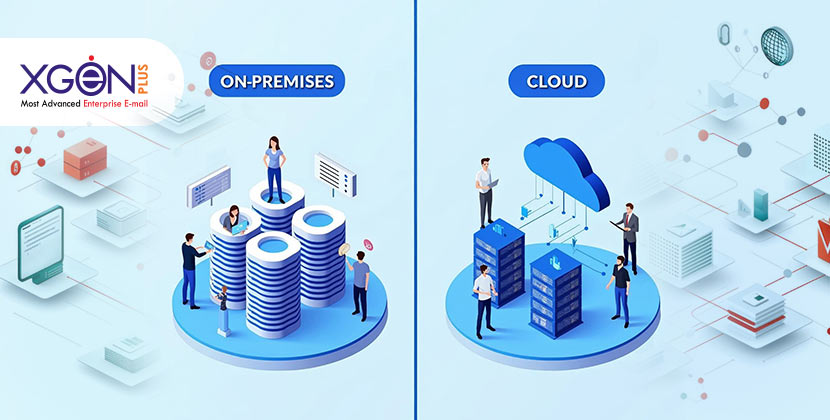
On-premises email refers to a setup where your company owns and manages the email servers within its premises. Everything from storage, configuration, and backups to security is handled by your internal IT team. This model gives businesses total control over their communication environment. It’s like owning your own building — you decide the structure, security, and access. On-premises email is ideal for organizations that handle confidential data or operate in highly regulated industries.

Key Features of On-Premises Email
- Hosted on company-owned servers
- Managed by internal IT teams
- Customizable according to organizational needs
- Enhanced data control and privacy
- One-time infrastructure cost (with ongoing maintenance)
Popular Use Cases
- Government organizations that require local data storage
- Financial institutions demanding maximum data sovereignty
- Enterprises with strict compliance requirements
What Is Cloud Email?
Cloud email is a hosted service where your email data lives on a provider’s cloud infrastructure instead of your own servers. The provider takes care of maintenance, security updates, and uptime, while you simply log in and work from anywhere. This makes it a cost-efficient and flexible option for businesses that don’t want to invest heavily in IT hardware. It’s perfect for growing teams, remote employees, and organizations that value convenience over full system control.

Key Features of Cloud Email
- Hosted on third-party servers
- Managed and updated automatically by the provider
- Accessible from anywhere, on any device
- Pay-as-you-go pricing
- Regular backups and uptime guarantees
Popular Use Cases
- Startups looking for agility and low setup costs
- SMEs that want to scale without heavy IT infrastructure
- Remote-first businesses with distributed teams
Cloud Email vs On-Premises Email: The Core Differences
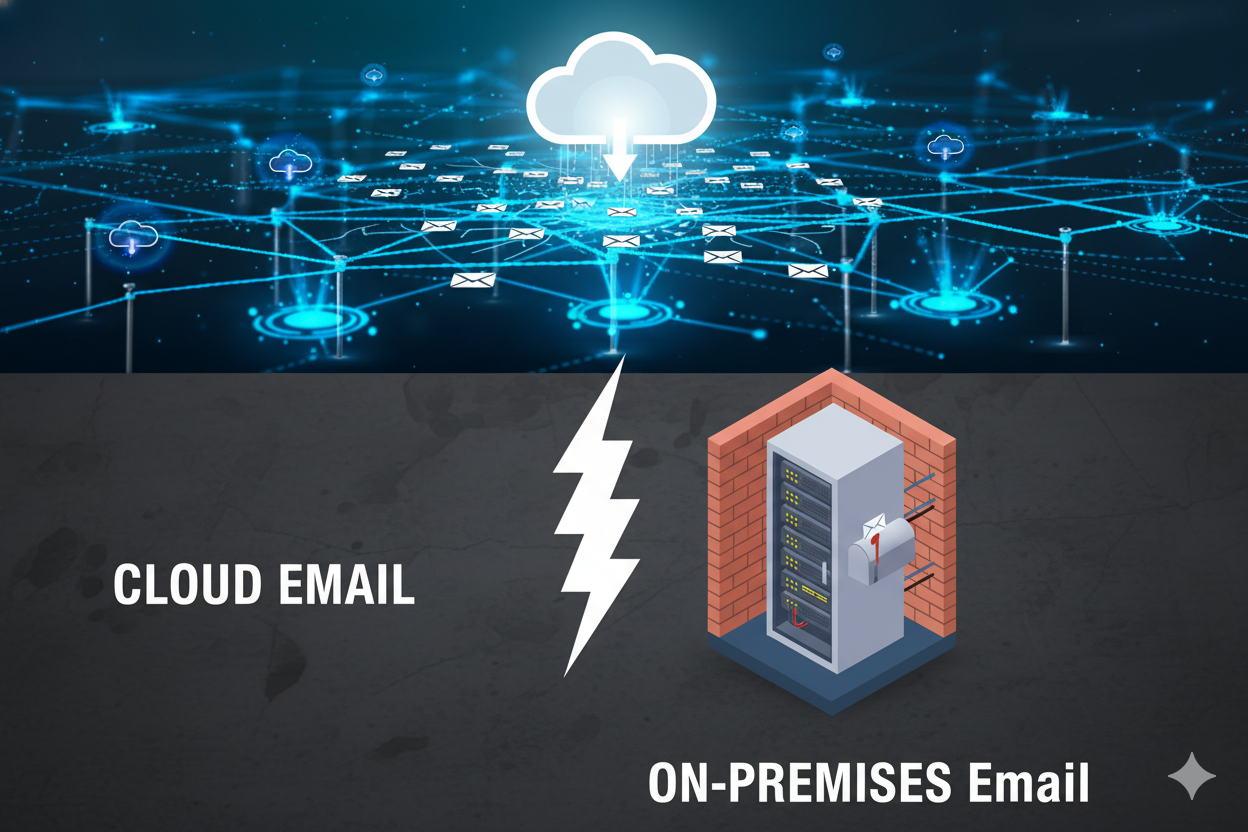
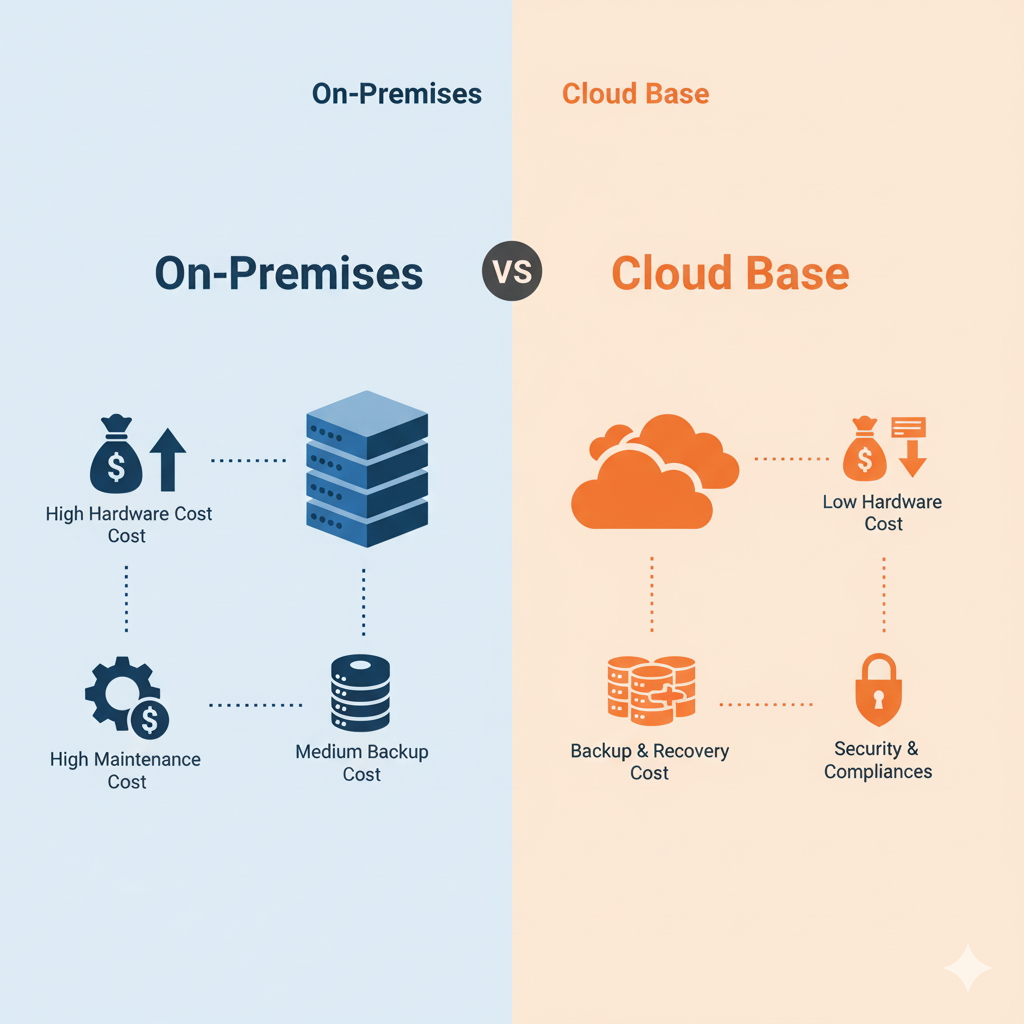
Both email models deliver professional communication, but they operate very differently. On-premises gives full control, while the cloud offers speed and flexibility. The key difference lies in who manages and secures your data. If you want to maintain everything in-house, on-premises is your path. If you prefer simplicity and scalability, the cloud wins. The table below breaks down how these models differ across cost, management, and compliance.
| Factor | Cloud Email | On-Premises Email |
| Hosting | On vendor’s cloud servers | On company’s own servers |
| Control | Managed by provider | Fully managed in-house |
| Cost | Subscription-based | One-time setup + maintenance |
| Scalability | Highly flexible | Limited by hardware |
| Security | Depends on provider’s protocols | Fully customizable by IT team |
| Compliance | Provider must meet regulations | Full internal control |
| Maintenance | Handled by vendor | Requires dedicated IT team |
| Accessibility | Access from anywhere | Restricted to internal network (unless configured) |
Private Cloud vs On-Premises: The Hybrid Perspective
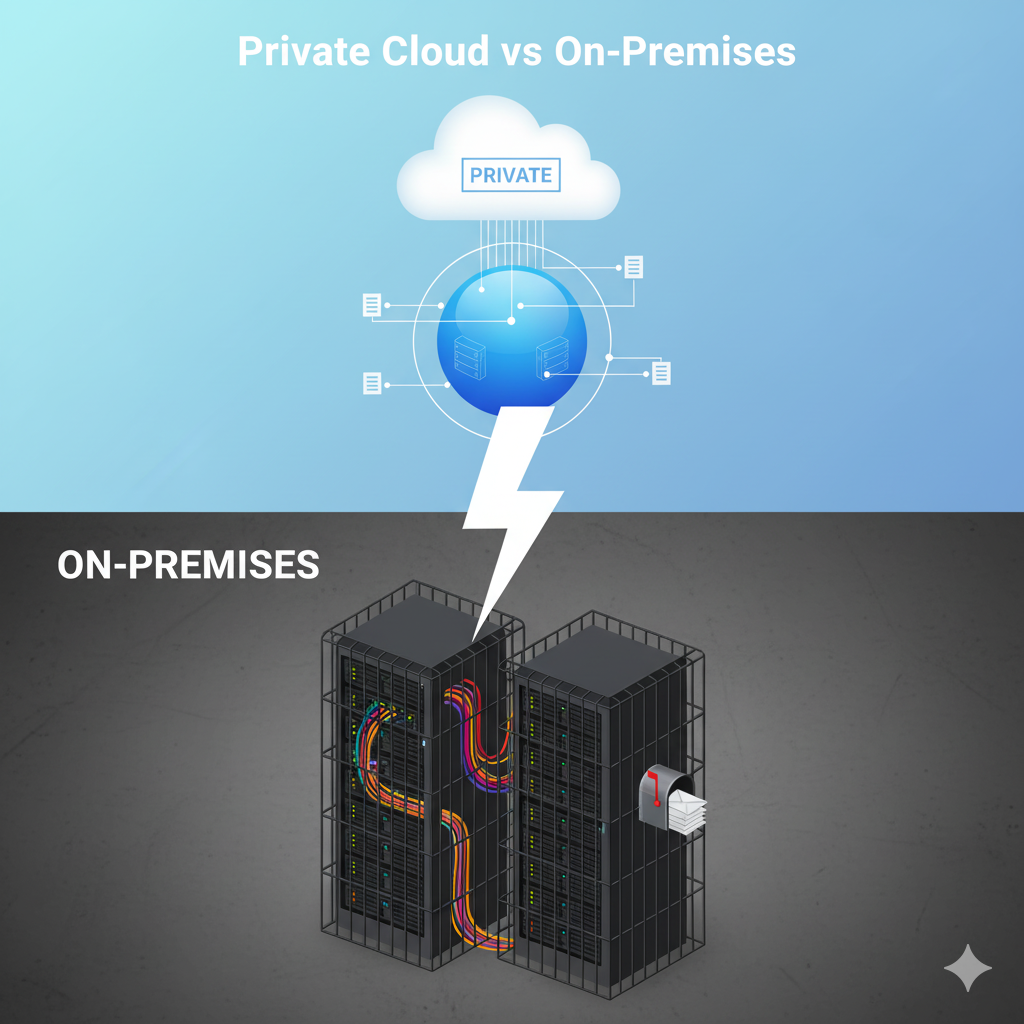
For many organizations, the best solution lies between the two extremes — a Private Cloud setup. This approach blends the control of on-premises infrastructure with the flexibility of cloud architecture. It allows businesses to enjoy better scalability without compromising on data privacy. Private clouds are hosted on dedicated servers but managed through modern cloud technologies. This hybrid model works best for enterprises seeking secure, compliant, and adaptable environments.
A private cloud offers:
- Dedicated hosting infrastructure (not shared with others)
- Better scalability than traditional on-prem
- Strong compliance and security control
This model suits businesses that want the security of on-premises with the ease of cloud management.
Why Many Enterprises Still Prefer On-Premises Email
Despite the global shift to cloud-based tools, many large organizations continue to rely on on-premise mail servers. The reason is simple — complete data control and compliance assurance. With on-premises setups, every byte of communication stays within the organization’s ecosystem. This is crucial for sectors like government, defense, and finance, where privacy is non-negotiable. Plus, the system can be customized to fit strict internal protocols, ensuring maximum accountability.
Advantages of On-Premises Email
- Data Sovereignty – Your data never leaves your organization.
- Enhanced Customization – Tailor security, user access, and integrations.
- Long-Term Cost Efficiency – One-time investment vs recurring subscription.
- Offline Access – Keep operations running even when the internet is down.
- Compliance Readiness – Easily meet data residency and privacy laws.
If your organization handles sensitive or classified communication, an on-premises email solution offers the control you need.

Why Cloud Email Dominates Modern Workplaces
Cloud-based solutions are rapidly taking over because they eliminate infrastructure headaches. Businesses no longer need to worry about server upgrades, backups, or downtime. The provider manages everything while you focus on growth. Cloud email is also cost-effective and supports hybrid work environments. With real-time syncing and mobile access, employees stay connected wherever they are. It’s the modern choice for teams that prioritize flexibility and productivity.
Advantages of Cloud Email
- No Maintenance Hassle – Provider handles updates, patches, and uptime.
- Quick Deployment – Get started in minutes, not weeks.
- Anywhere Access – Work from any device or location.
- Budget-Friendly Plans – Pay only for what you use.
- Built-in Redundancy – Data backups and disaster recovery included.
If agility and collaboration are your top priorities, cloud email is the modern route.

Choosing Between On-Premise vs Cloud: What’s Right for You?
Selecting the right model depends on your organization’s size, budget, and compliance needs. Cloud email suits growing teams that want convenience and scalability, while on-premises systems favor institutions demanding data autonomy. A hybrid approach can also help you balance both — storing sensitive data locally while using the cloud for everyday collaboration. The key is aligning your email infrastructure with your long-term business and security goals.
| If You’re a... | Go For... | Because... |
| Government agency | On-Premises | Local data control & compliance |
| Financial institution | On-Premises | Sensitive data handling |
| SME or Startup | Cloud Email | Low cost, easy setup |
| Enterprise with hybrid teams | Private Cloud | Flexibility + control |
The Future of Business Email: Hybrid Is the New Normal
As digital ecosystems evolve, businesses are embracing hybrid models for the best of both worlds. These setups keep critical communication secure in-house while leveraging cloud scalability for non-sensitive workflows. Hybrid email infrastructures reduce costs, strengthen compliance, and improve disaster recovery. The future isn’t purely on-premises or purely cloud — it’s strategically balanced. This ensures agility, control, and resilience no matter how fast technology changes.
This model offers:
- Optimized costs
- Balanced control and scalability
- Stronger security posture
It’s the future of enterprise email.

How XgenPlus Bridges the Gap
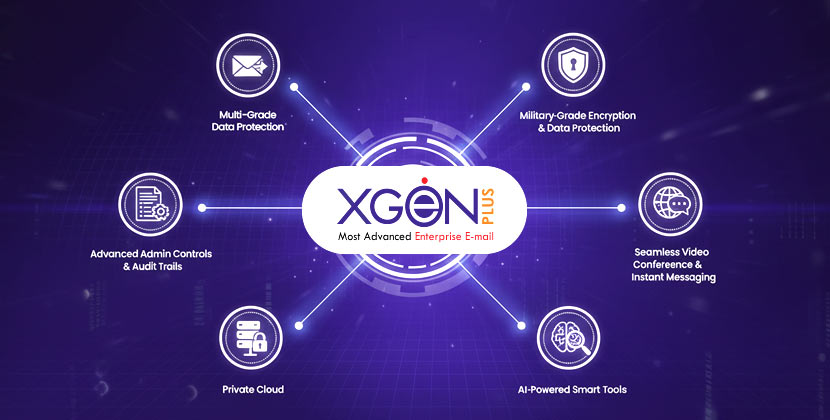
At XgenPlus, we believe businesses shouldn’t have to choose between convenience and control. Our Enterprise Email Solutions combine the power of cloud technology with the security of on-premises architecture. Whether you’re a startup or a large-scale enterprise, XgenPlus helps you communicate with confidence. We also offer Private Cloud Email, giving your organization a dedicated environment built for compliance, performance, and scalability.
With XgenPlus Professional Business Email Solutions, you get:
- Military-grade encryption and data protection
- AI-powered writing tools like AI Compose & AI Reply
- Seamless video conferencing and instant messaging
- Support for multiple domains and languages
- Advanced admin controls and audit trails
Whether you’re a small business or a large enterprise, XgenPlus ensures your communication remains secure, compliant, and intelligent.
Conclusion
Choosing between Cloud Email and On-Premises Email isn’t about which one is better — it’s about what’s better for your business. On-premises gives you unmatched control, while cloud offers effortless scalability. A hybrid model provides the flexibility to adapt as your organization grows. With XgenPlus, you don’t have to compromise. You get the best of all worlds — performance, privacy, and productivity — in one powerful ecosystem designed for professionals.
Explore
Business Email Plans & Pricing
Partner with us through our
Business Email Partner Program
Discover the full range of
XgenPlus Products