Email continues to be the backbone of business communication. Companies use it daily to share updates, documents, financial data, and customer information. It is fast, convenient, and widely adopted across industries.
However, many businesses still rely on traditional email systems that were not built for today’s cybersecurity landscape. Modern threats like phishing attacks, data interception, and account compromise make regular email risky for sensitive communication.
This is why organizations are moving toward secure email communication. Understanding the difference between secure email vs regular email helps businesses protect confidential information and maintain compliance with security standards.
What Is Regular Email?
Regular email refers to traditional email systems used for everyday communication. These systems focus mainly on delivering messages quickly between users. While they are efficient for general communication, they typically lack strong security controls.
Most regular email systems rely on standard email protocols. These protocols were created decades ago when cybersecurity threats were much less advanced. As a result, they do not always provide the protection businesses need today.
Common characteristics of regular email include:
- Basic message delivery
- Standard authentication methods
- Limited encryption protection
- Basic spam filtering
Regular email works well for routine communication. However, when organizations send sensitive information such as financial records or contracts, the lack of strong protection can create serious security risks.
What Is Secure Email?
Secure email is designed to protect sensitive communication by adding multiple layers of security. These systems use encryption, authentication, and monitoring technologies to ensure that messages and attachments remain protected during transmission.
Unlike traditional email services, secure email focuses on protecting data rather than simply delivering messages. It ensures that only authorized users can access the information being shared.
A secure email platform typically includes:
- End-to-end email encryption
- Identity verification and access control
- Threat detection and phishing protection
- Audit logs and compliance monitoring
These features make secure email communication essential for organizations that handle confidential data, client information, or regulatory documents.
Secure Email vs Regular Email: Key Differences
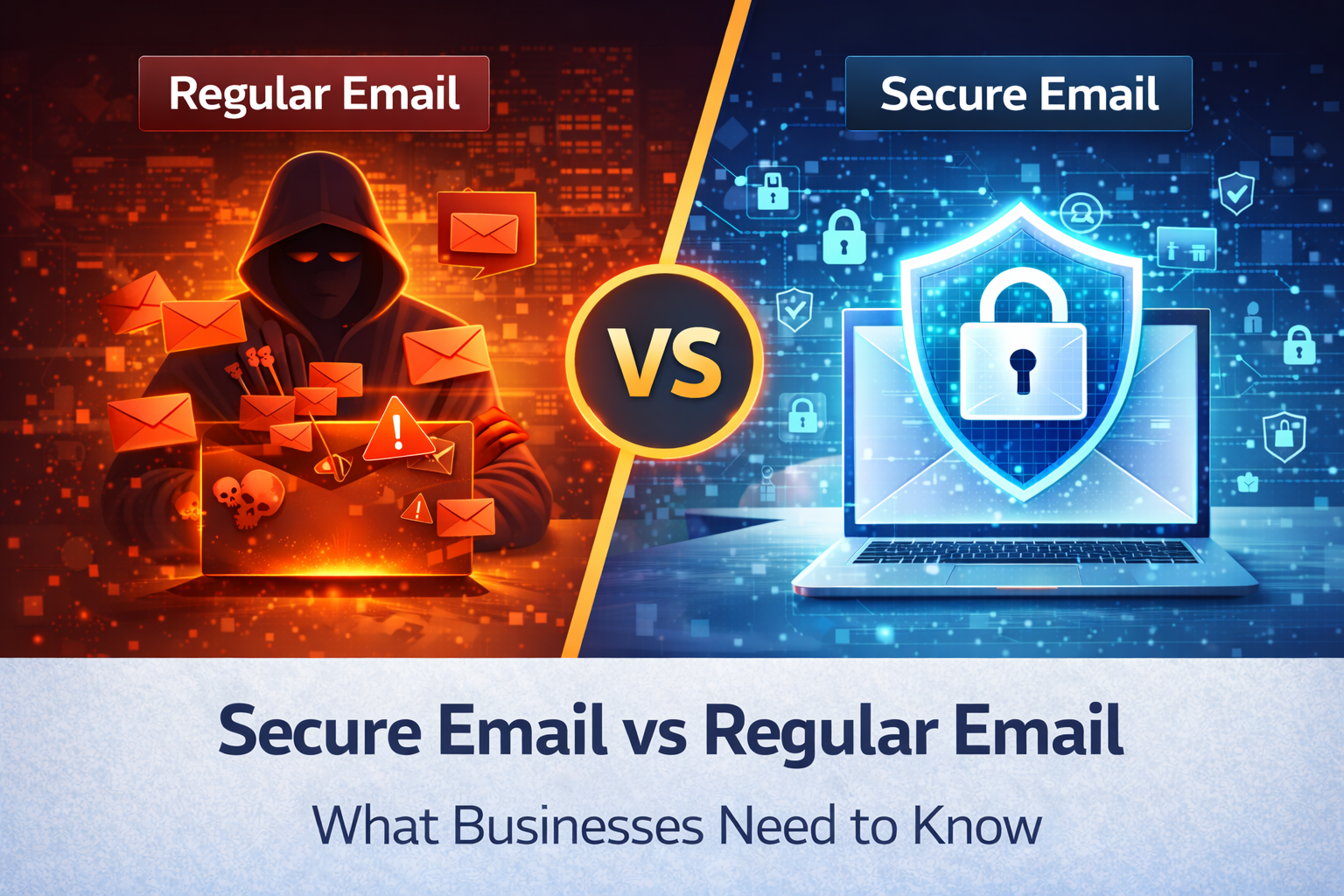
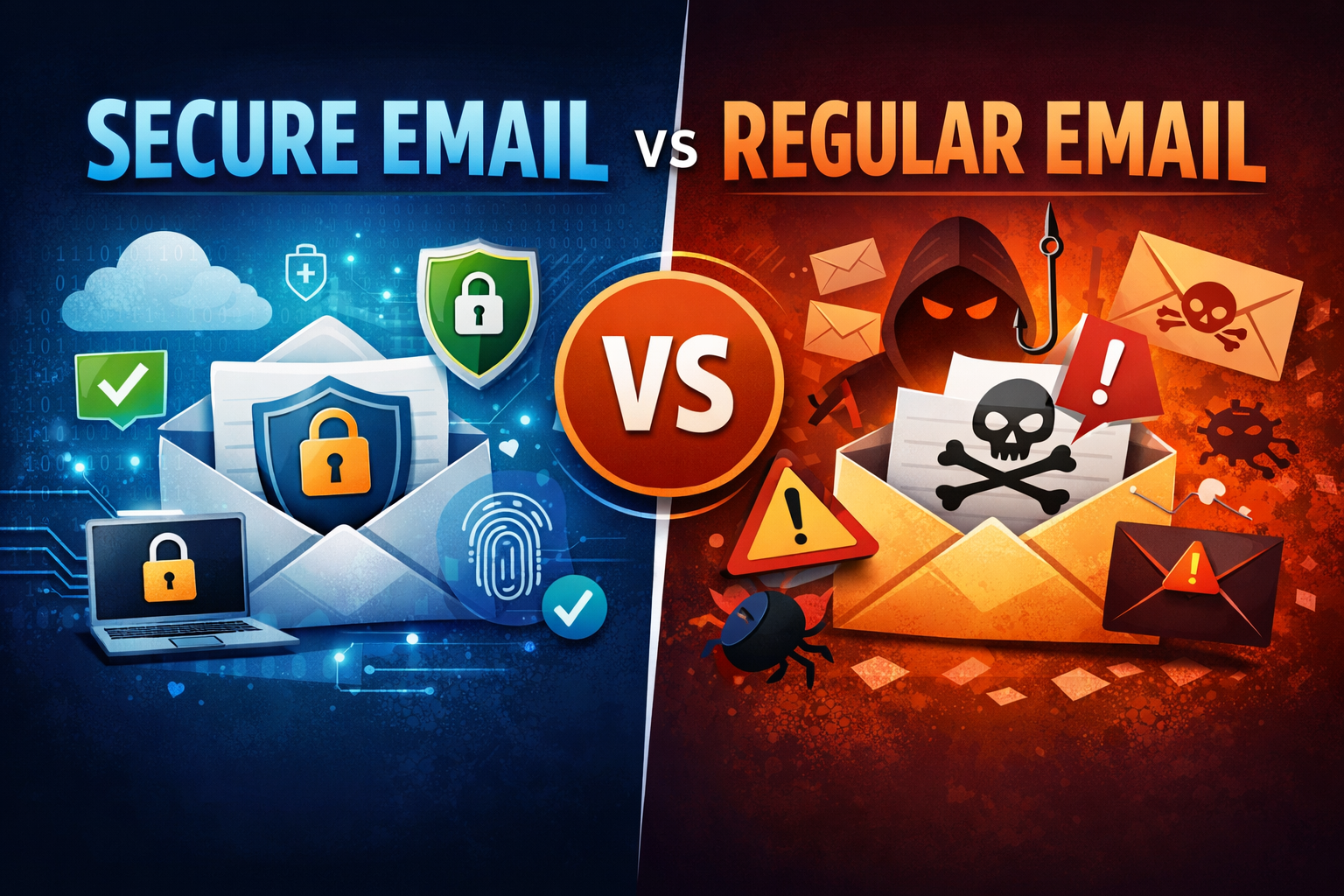
The main difference between secure email and regular email lies in how they handle security and data protection. Regular email systems prioritize convenience and speed, but they often lack advanced safeguards against modern cyber threats.
Secure email platforms, on the other hand, are designed to protect business communication. They use advanced security technologies that prevent unauthorized access and reduce the risk of data breaches.
The comparison below highlights the key differences between secure email vs regular email.
| Feature | Regular Email | Secure Email |
|---|---|---|
| Encryption | Limited or optional | End-to-end encryption |
| Security Protection | Basic spam filters | Advanced threat protection |
| Compliance Support | Not guaranteed | Built for regulatory compliance |
| Data Protection | Vulnerable to interception | Strong data protection |
| Access Control | Basic authentication | Multi-layer identity verification |
| Audit Tracking | Limited | Detailed monitoring and logs |
For businesses that regularly exchange sensitive information, choosing secure email can significantly reduce security risks.
Why Businesses Are Moving to Secure Email
Cybersecurity threats are growing rapidly, and email remains one of the most common attack vectors. Hackers often target employees through phishing emails or malicious attachments to gain access to company systems.
Because of this, organizations are rethinking how they manage business communication. Many companies are adopting secure email for business to ensure their data remains protected.
Some of the key reasons businesses move to secure email include:
Protection from Cyber Threats
Cybercriminals frequently use phishing emails and malware to compromise company accounts. Secure email platforms include advanced threat detection that identifies suspicious activity and blocks dangerous messages before they reach employees.
Data Privacy Regulations
Many industries must follow strict data protection laws. Secure email systems help businesses meet email security compliance requirements by protecting sensitive communication and maintaining proper data governance.
Protection of Sensitive Information
Businesses regularly send confidential information through email. Without strong protection, this data can be exposed or intercepted during transmission.
Examples of sensitive information include:
- Contracts
- Financial reports
- Customer data
- Legal documents
Secure email platforms help ensure this information remains protected.
Customer Trust
Customers expect organizations to handle their data responsibly. Using secure communication systems demonstrates that a company takes data protection seriously. This builds trust and strengthens long-term relationships.
How Secure Email Protects Business Communication
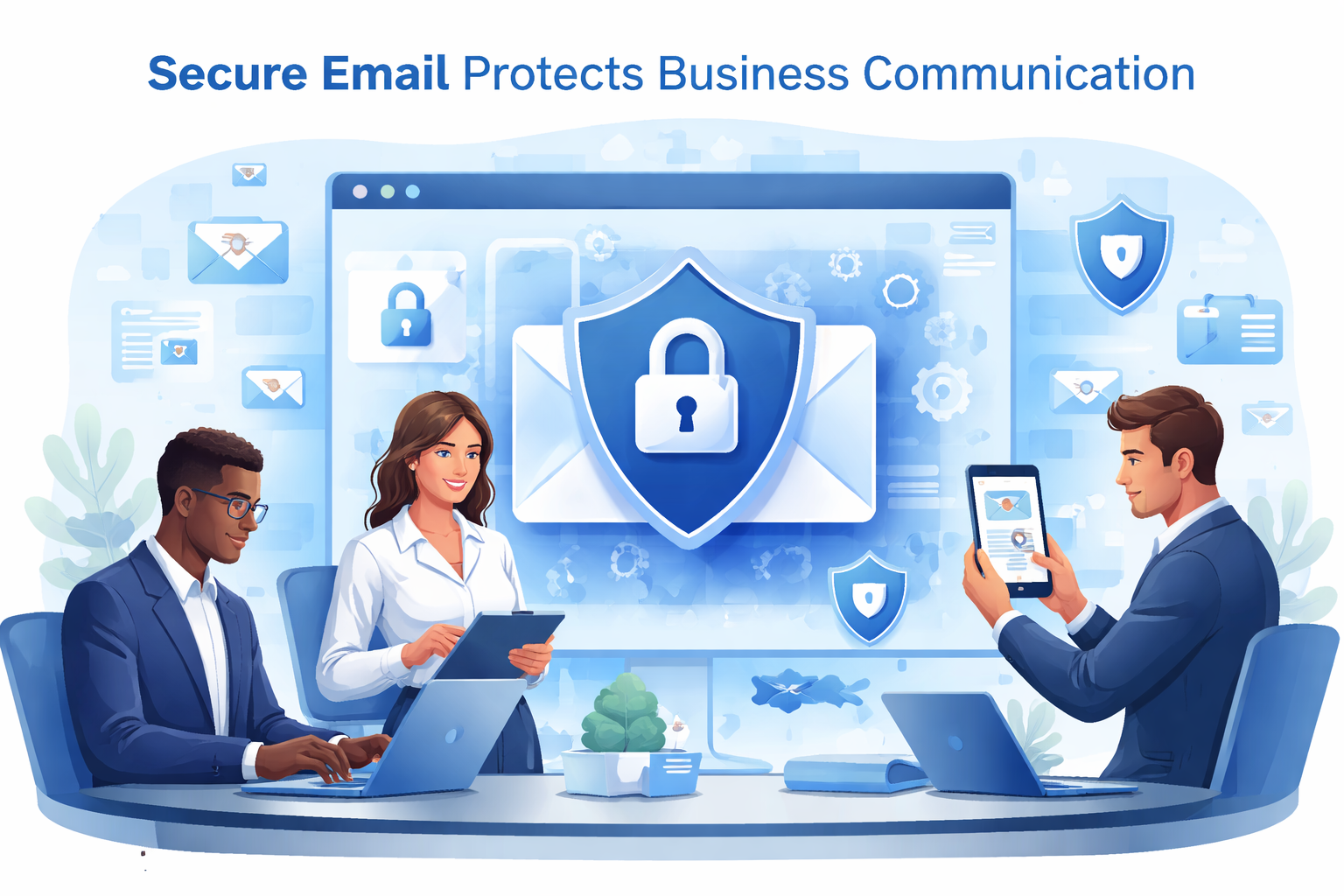
Secure email platforms use multiple technologies to protect communication channels. Instead of relying on a single layer of protection, these systems create a multi-layer security approach.
This approach helps prevent unauthorized access, detect threats early, and protect sensitive information during transmission.
Some of the key protection mechanisms include:
Email Encryption
Encryption converts email content into coded information. Only authorized recipients can decrypt and read the message. Even if the email is intercepted, attackers cannot access the information inside.
Identity Verification
Secure email platforms verify user identity before granting access. This reduces the risk of unauthorized login attempts and prevents attackers from accessing sensitive email accounts.
Threat Detection
Modern enterprise email security platforms analyze email patterns to detect suspicious activity. These systems identify phishing attempts, malicious links, and harmful attachments before they reach employees.
Secure Data Sharing
Secure email systems also enable safe file sharing. Businesses can send sensitive documents through protected channels instead of using unprotected attachments.
Choosing the Right Enterprise Email Solution
Selecting the right enterprise email solution is essential for organizations that prioritize secure communication. A reliable platform should combine strong security features with easy-to-use collaboration tools.
Businesses should evaluate email platforms carefully before making a decision. The right system should protect sensitive communication while supporting daily business operations.
When choosing a secure email platform, organizations should consider:
- Strong encryption capabilities
- Built-in email security and compliance features
- Protection against phishing and malware
- Audit trails for monitoring activity
- Scalability for growing organizations
Modern enterprise email security platforms help businesses create a secure communication environment while maintaining productivity.

Why Businesses Choose XgenPlus for Secure Email Communication
As cyber threats continue to evolve, businesses need an email platform that prioritizes security without compromising productivity. XgenPlus is a modern enterprise email solution designed to support secure and compliant business communication.
Unlike traditional email systems, XgenPlus focuses on protecting sensitive data while enabling efficient collaboration. The platform integrates advanced enterprise email security features that help organizations safeguard communication and reduce the risk of cyber threats.
XgenPlus is built to support organizations that require secure communication infrastructure. From enterprises to government organizations, it provides reliable tools for protecting confidential information while maintaining regulatory compliance.
Some key features that make XgenPlus a powerful secure email platform include:
- Advanced Email Security & Compliance controls
- Strong encryption for secure email communication
- Protection against phishing and malicious email threats
- Audit trails for monitoring email activity
- Native language email address support (EAI/IDN)
- Integrated AI Compose for smarter communication
With these capabilities, XgenPlus helps organizations maintain secure communication while protecting their digital assets and sensitive data.
Final Thoughts
Email will remain a critical tool for business communication. However, the growing number of cybersecurity threats has made secure communication more important than ever.
Traditional email systems were designed mainly for convenience. They often lack the advanced protection required to safeguard sensitive business information in today’s digital environment.
Understanding the difference between secure email vs regular email allows businesses to make informed decisions about their communication infrastructure. Secure email platforms provide stronger protection, improved compliance, and better control over business communication.
By adopting secure email solutions, organizations can protect confidential information, reduce cybersecurity risks, and maintain trust with customers and partners.