Introduction
Email remains one of the most widely used communication tools for businesses. Organizations use email daily to share confidential documents, financial information, internal discussions, and customer data. However, as cyber threats, phishing attacks, and privacy concerns continue to grow, businesses are becoming more aware of the need for secure and privacy-focused email communication. This has increased interest in terms like encrypted email and private email, which are often misunderstood or used interchangeably.
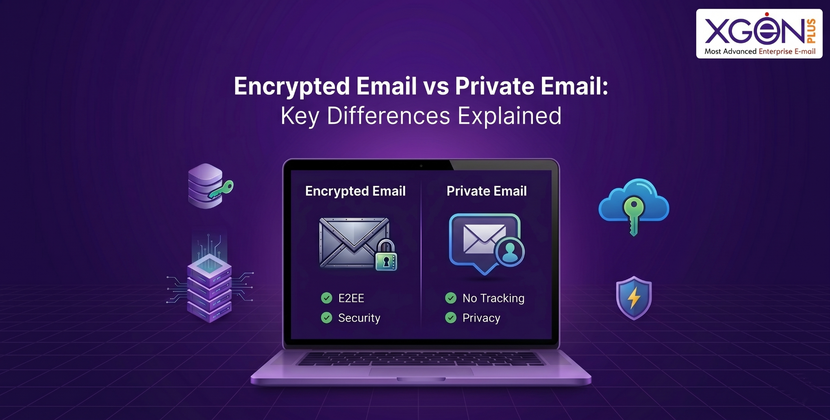
While both encrypted email and private email improve communication security, they serve different purposes. Encrypted email focuses on protecting the contents of a message from unauthorized access, while private email is designed to protect user data, privacy, and organizational control. Understanding the difference between the two is important for businesses that want stronger cybersecurity, better compliance, and safer digital communication. In this blog, we will explain what encrypted email and private email mean, how they differ, and why modern organizations need both.
What Is Encrypted Email?
Encrypted email is designed to secure the contents of an email by converting readable information into encoded data that can only be accessed by authorized users. The purpose of encryption is to prevent hackers, cybercriminals, or unauthorized individuals from reading sensitive communication during transmission.
When an email is encrypted, the message is transformed into unreadable text using encryption protocols and can only be decrypted using a secure key. This helps businesses protect confidential information shared through email.
Common email encryption methods include:
- TLS (Transport Layer Security)
- End-to-end encryption
- PGP (Pretty Good Privacy)
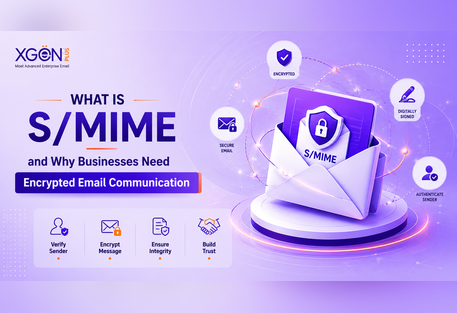
- S/MIME encryption
Encrypted email is commonly used by businesses to:
- Protect financial information
- Secure legal communication
- Share confidential files safely
- Reduce risks of cyberattacks
- Support compliance requirements
Encryption plays a major role in strengthening business communication security, but it mainly focuses on protecting the message itself.
What Is Private Email?
Private email is focused on protecting user privacy and ensuring greater control over organizational data. Unlike encrypted email, which primarily secures message content, private email aims to minimize tracking, data scanning, and unauthorized access to user information.
A private email service typically ensures that:
- User data is not scanned for advertising purposes
- Email activity is not unnecessarily tracked
- Organizations have better control over stored data
- Sensitive information remains protected from third-party misuse
Private email solutions are designed to improve confidentiality and reduce exposure of business information. They are especially important for organizations that prioritize data privacy, regulatory compliance, and secure communication practices.
Key features often associated with private email include:
- Privacy-focused infrastructure
- Secure data storage
- Minimal tracking
- Better data ownership control
- Strong privacy policies
For modern businesses, private email helps create a more trusted and secure communication environment.
Encrypted Email vs Private Email: Key Differences
Although encrypted email and private email are related, they solve different security and privacy challenges.
|
Feature |
Encrypted Email |
Private Email |
|
Main Focus |
Protecting email content |
Protecting user privacy |
|
Purpose |
Prevent unauthorized access |
Prevent data misuse and tracking |
|
Encryption |
Yes |
May include encryption |
|
Data Tracking Prevention |
Limited |
Stronger privacy controls |
|
Metadata Protection |
Basic |
Better protection |
|
Data Ownership Focus |
Low |
High |
|
Security During Transmission |
Strong |
Depends on provider |
|
Privacy Protection |
Partial |
More comprehensive |
The core difference is simple:
- Encrypted email protects the communication itself
- Private email protects the user and organizational data
Businesses that want complete communication security should ideally implement solutions that provide both encryption and privacy protections.
Why Businesses Need Both Encryption and Privacy
Modern cyber threats are becoming more sophisticated every year. Businesses now face risks such as:
- Phishing attacks
- Business Email Compromise (BEC)
- Insider threats
- Data leaks
- Unauthorized surveillance
- Compliance violations
Encryption helps protect emails from being intercepted by attackers, while privacy-focused systems help ensure that sensitive organizational data is not unnecessarily exposed, monitored, or analyzed.
Using only encryption may still leave metadata and user information vulnerable. Similarly, using a private email solution without strong encryption may expose communication during transmission.
That is why businesses should focus on both security and privacy when choosing an email platform.
The Growing Importance of Secure Business Communication
Digital transformation and remote work have significantly increased the amount of sensitive information shared through email. Businesses regularly exchange:
- Contracts
- Financial documents
- Customer records
- Intellectual property
- Internal communication
- Compliance-related information
Traditional email systems may not provide enough protection against modern cybersecurity risks. Organizations now require secure business email solutions that offer:
- Advanced encryption
- Privacy-focused communication
- Secure access controls
- Threat protection
- Administrative visibility
- Audit capabilities
As data privacy regulations continue to evolve, businesses are also under increasing pressure to improve how they handle and protect sensitive communication.
How XgenPlus Supports Secure and Private Business Communication
XgenPlus helps organizations strengthen business communication with enterprise-grade email security and privacy-focused capabilities. The platform is designed for businesses that require secure communication, better control over sensitive information, and protection against evolving cyber threats.
XgenPlus supports secure business communication through features such as:
- Encrypted email communication
- Audit trails
- Administrative control
- Secure access management
- Business-focused privacy protections
By combining security and privacy-focused capabilities, XgenPlus helps businesses improve communication security while supporting compliance and organizational trust.
How to Choose the Right Email Solution
Businesses should carefully evaluate their email platform based on both security and privacy requirements.
1. Strong Security Features
Choose an email solution that provides:
- Email encryption
- Anti-phishing protection
- Multi-factor authentication
- Access controls
2. Privacy-Focused Infrastructure
Ensure the provider supports:
- Minimal data tracking
- Transparent privacy practices
- Better data ownership
- Secure data storage
3. Compliance Support
Organizations should look for:
- Audit trails
- Data retention capabilities
- Administrative visibility
- Compliance monitoring
4. Administrative Control
IT teams should have the ability to manage:
- User access
- Security policies
- Threat monitoring
- Communication controls
Choosing the right business email platform can significantly reduce cybersecurity risks while improving trust and operational security.
Final Thoughts
Encrypted email and private email are both essential parts of modern business communication, but they are not the same. Encryption protects the actual contents of an email from being intercepted or accessed by unauthorized users, while private email focuses on protecting user data, reducing tracking, and ensuring greater control over sensitive information. Businesses that rely only on encryption may still face privacy risks, while privacy-focused systems without strong encryption may leave communication vulnerable to cyber threats.
As organizations continue to handle large amounts of sensitive information online, the need for both security and privacy has become more important than ever. Businesses should look for email solutions that combine strong encryption, privacy-focused infrastructure, administrative control, and compliance support. XgenPlus helps organizations strengthen secure communication with features designed to support both privacy and enterprise-grade email security, helping businesses build a safer and more trusted digital workplace.